Monday, August 16, 2010

A Week in August: The Margaret Mitchell Tribute

Non omnis moriar multaque pars mei vitabit Libitinam.

August 16 being the day Margaret Mitchell died, we thought a tribute was in order.  But then, between us being ourselves and a lovely lady reader giving us advice, that tribute quickly evolved into a series. So why not declare this week a Margaret Mitchell week and have a little snippet of her letters/writing outside Gone with the Wind each day, while inviting you to share your thoughts on MM and GWTW with us?

Sounds like a good enough plan, so let's proceed, shall we? Today being the first day of our tribute, and the date on which Margaret Mitchell passed away, we thought we'd simply invite you to share what Gone with the Wind means to you and the impact Margaret Mitchell's writing has had on your life so far. This thread will be open all week, so please join us and leave your comments below.

We'll go first:

iso:
Like many Windies, it's hard for me to fully express what Margaret Mitchell and  Gone with the Wind mean to me. But the most succinct answer I can give in this short space is that Margaret Mitchell was the first author to make me truly fall in love with literature. No book before or since has moved me like Gone with the Wind has. No other author has ever inspired me the way Margaret Mitchell first did, through the sheer power of her words and her characters, to want to be a writer myself one day. Everyone deserves to have a book like that in their lives--a book that inspires love for the written word--and Gone with the Wind is my book. And for that, thank you, Margaret Mitchell! 

Bugsie:
Dear Mrs. Mitchell, 
I've often wondered what it was about your book that made me always remember it, for I've known many books that were prettier than it and certainly more innovative and, I fear, historically much more objective and kind. But somehow, I always remembered Gone with the Wind. Even during the years when I thought I had grown out of it and was immersed into so many other wonderful books, I always remembered yours and wondered what Scarlett and Rhett were doing. And there I have my answer, for no other book, however wonderful, has ever given me characters like yours. Characters so strong that I see them not only as old friends, but almost as real people. Gone with the Wind and its figures are simply part of my life now and that's all there is to it.
Cheesily, 
Bugsie

Well, now it's your turn! Kicking off the week-long Margaret Mitchell thread.

Sunday, August 15, 2010

Something Old, Something New: Everything Related to Scarlett Saying 'I Do' (to Rhett, of course!)

Imagine it's 1868 and you've been invited to a wedding held in one of Atlanta's finest parlors--that of Miss Sarah Jane Hamilton. The event is still a couple of days away, but the entire city is already sizzling with gossip and anticipation. One question is on everyone's mind: What will the bride, Miss Hamilton's scandalous niece, be wearing? She is a widow of only a year after all, how much bolder can she get?  (Though judging by her engagement ring, that perfectly vulgar piece that Captain Butler bought for her in Europe, one can never tell... )

If you're not one of the lucky few who've been privy to all the juicy details prior to the blessed event, worry not! How We Do Run On is here to provide you with a well-informed insight into the soon-to-be Mrs. Butler's toilette, as well as with a gallery of fashionable dresses she can choose from, hidden from prying eyes after the jump. We even have widow wedding dresses for you!

A Victorian Wedding Certificate
The Wedding Dress: White Silk, Lace and "Elegant Simplicity" 

We'll start, of course, with the element that surely has you most preoccupied, that central piece of any wedding and dream of any bride to be--the wedding dress. Regarding this year's bridal style, our trusted source, Harper's Bazar, spells it plainly out for us: "Bridal toilettes are remarkable for their elegant simplicity. The richest materials plainly made embody the correct idea of a dress for a bride." 

Dresses of white silk and lace are, of course, the de rigueur selection for brides (We're looking at you, Maybelle Merriwether!), but for those who cannot afford silk, dresses of grosgrain, poult de-soie, taffeta or faille are also acceptable. You'll find many examples of elegant wedding dresses after the jump at the end.

As one would expect, a wedding dress worn for a church ceremony would be a little more conservative, calling for a "high bodice and close sleeves." But for a home wedding (aka one in Miss Hamilton's parlor), a lower necklace and pannier skirt (a looped skirt draped over the hips) are acceptable, and in this particular case even highly-recommended. However, Harper's, in a moment of regrettable contradiction, declares that pannier skirts are not popular in wedding attire, only to say that they should be worn for home weddings, in the very next breath. So we guess Scarlett, our bride in question, is free to choose after her own taste (or lack thereof).

The Veil: Less is More

Next off is the veil. Now if Scarlett chooses to follow convention for her wedding to Captain Butler, you won't be seeing any veil. Veils are the property of new brides only; widows do not wear them. But if our rebellious bride decides to break the rules, here's the scoop: this year veils are made of plain tulle without trimming, in line with the edict of "elegant simplicity." This style is deemed both "prettiest" and "very much admired" by Harper's.  As custom, veils should also be long, with the front veil coming close to the waist, while the longer back portion reaches nearly to the train of the dress.  

The Flowers: Orange Blossoms, Clematis, Jasmine and Myrtle, Oh My!  

In the last couple of years, our long preferred wedding flower--the orange blossom--registered a certain and regrettable decline in popularity. Harper's certainly takes a dismissive tone about it: "Orange blossoms are losing prestige for bridal flowers. The buds are stiff, and the full-blown flowers large and coarse looking. They are prettiest and least unbecoming when mingled with other small flowers, such as clematis, jasmine, or the bridal spirae." 

White lilies and myrtle are still very much used as wedding flowers. Myrtle blossoms, in fact, are all the rage with young brides in Europe. Not so for European widows: they are the only ones on the Old Continent who still wear orange blossoms, so it's safe to assume Scarlett will wear them too, if only to be in line with the latest European fashion. 

The Hair: Of Curls and Finger Puffs

We've already established that Reconstruction-era ladies love curls and finger puffs in their hairstyles. So it's little wonder, then, that these elements are considered quite stylish for our 1868 bride: "The front hair is crped [sic]. Soft, light, airy curls float at the back over small finger puffs formed of the natural hair."  Below is an "evening dress" hairstyle from the March 7th, 1868 edition of Harper's Bazar that nicely resembles this description and that could just as well be Scarlett's choice: 


The Accessories: Lots of Fancy Finishing Touches 

Accessories make the (wedding) outfit, so we're certain Scarlett will have had some very fancy finishing touches to crown her bridal glory. Here is what Harper's recommends: "The bridal fan is of white silk or satin under lace, with pearl sticks. Handkerchief trimmed with lace of the kind used in the dress. Gloves of softest kid, and boots of the dress material buttoned with Roman pearls and trimmed with blonde lace."

The Jewelry: Pearls Trump Diamonds 

At least in this year's weddings they do, although, if one thinks of her engagement ring, Scarlett might disagree on this point. Still, Harper's clearly records that "prominence is given them [pearls] in wedding parures even when associated with diamond." 

Engagement rings should be "a solitaire diamond or pearl in crown setting without enamel," a far cry from the tasteless collection of stones Captain Butler presented his betrothed with. (And to think they say he's a man of taste...) Wedding bands are expected to be equally understated: "a plain hoop not very wide, made of twenty-four-karat gold," so we shall wait with bated breath to discover what his choice will be for that.

The Bridesmaids Dresses: Ridiculous This Year as Well  
 
Now that we've covered the bride's outfit, we can take a quick look at what her bridesmaids could be wearing. Poor dear sweet bridesmaids, the style of their dresses won't probably change for the next two centuries! Their dresses are puffed and tulle-d to the max: "Bridesmaid's dresses are of tulle and tarlatan in successive puffs, with a tulle overskirt looped with flowers. A different flower and a becoming color of trimming is assigned to each bridesmaid."  Bridesmaids sometimes wear short veils, in a style similar to the bride's own. 

You May...See the Bride!

So now, dear readers, you know what to expect from the blessed occasion of Scarlett and Captain Butler's union. We sincerely hope we've kept you one step ahead of this brazen combination, so their sartorial choices won't be a surprise--or even worse, a shock--to you.

If you want to see an assortment of wedding dresses, taken both from last year's magazines, and from some editions we miraculously managed to retrieve for you even before they were printed and available to the general public, take a look under the jump!

Which dress do you think Scarlett would choose? Let us know in the comments! 
 

Friday, August 13, 2010

Of Rich Bachelors and Debauchery

This little post today is the warm-up act for a very pretty and detailed insight into Rhett and Scarlett's wedding that the fashionista of our blog (iso, in case you're new around here) will have for you this weekend. (Abundance of period fashion plates! Run for your lives. You have been warned.)

So while my co-blogger is busy with that (and with trying to lock me out of my account once she reads this post), I will assume the voice of a Victorian moralist and see what really lurks beneath Rhett's "I am not a marrying man" statement:
"The main reason, therefore, why the number of marriages in this class of our population is declining is because the men choose to have it so, and not because the women are beyond their capacity to support. Three-fourths of the bachelors of our acquaintance are rich enough to bear the expense even of the most fashionable women; and, what is equally certain, they are bachelors just because they are rich. Wealth often indisposes men to marry, but it rarely has this effect on women. At the period of life when marriage begins to charm the fancy and awaken the sensibilities our fast young men are preoccupied. They have already, in most cases, surrendered their souls to other captors. Dissipation and licentiousness have utterly unfitted them for poetry and love, and they vastly prefer a midnight debauch, to the pleasures of the fireside and the companionship of a devoted wife."
--excerpted from the November 2, 1867 inaugural edition of Harper's Bazar
Ah, exactly like I suspected! It was bitchery and abomination* dissipation and licentiousness that kept Rhett from enjoying the tame pleasures of the hearth and "the companionship of a devoted wife." You will notice, though, how poetry and love are tied together and opposed to debauchery. If Scarlett had been of a more flowery language, that's what she would have told her husband instead of "You can't understand Ashley or me. You've lived in dirt too long to know anything else."

"Dissipation and licentiousness have made you utterly unfitted for poetry and love. Good night."

On a second thought, thank God she wasn't that eloquent. 

*TM: William Faulkner, don't you all faint at once.

Thursday, August 12, 2010

On the Steps of Wesley Chapel

"When she reached Wesley Chapel, she was breathless and dizzy and sick at her stomach. Her stays were cutting her ribs in two. She sank down on the steps of the church and buried her head in her hands until she could breathe more easily." -- Gone with the Wind, Chapter XXI

Today's post should be called "How Research Spoiled Bugsie's Childhood Dreams: Part 1." You see, every time I read Gone with the Wind without bothering to google for Wesley Chapel (which is really every time I've read Gone with the Wind), the image I had in mind  reading that scene was that of an imposing structure with wide stone steps leading to it. Something like, well, this: 
The Church of the Immaculate Conception
Wesley Chapel, though? Looks like this:

Wesley Chapel
Sometimes historical accuracy quite plainly sucks. But leaving my lost naivete about historical buildings aside, this type of (more than just a little) unglamorous construction makes sense, considering that this was Atlanta's first and oldest church. Some of you might remember the post in which we talked about Marthasville's/soon-to-be-Atlanta's first religious establishment, a plain clapboard structure where the city's five religious groups held their services alternatively. The Methodists were the first to move out. With much difficulty, some $700 were raised in 1847, out of which $150 were used to buy a lot a few hundred feet south from the original building. 

The funds were barely enough to cover the costs of the simple frame structure you see above and little was left for the inside, but the members were determined to have their own church, so they furnished the interior by collective effort/improvisation. Benches were made from rough slabs obtained from a local mill, a druggist prescription table upon a crudely built platform became the pulpit, while a homemade tin chandelier provided the illumination. The chapel was named Wesley in the honor of John Wesley, the founder of Methodism, and dedicated in March of 1848. 

In 1850, money was raised again, this time to buy a bell for the church. The $300 bronze piece, with the silver of 100 Mexican dollars mixed into alloy for better resonance, proved too heavy for the chapel's frame, so it was installed into a separate bell tower. The sounds of the new bell soon proved a nuisance for an invalid woman living on Peachtree Street, so her caring and resourceful husband paid some boys to steal the clapper. In a moment of inspiration worthy of their colleague fictional prankster Tow Sawyer, the boys dumped the clapper into a well... the Baptist preacher's well, to be precise. The Methodist pastor had to publicly declare he wouldn't suspect his Baptist brothers of such a low trick to avoid an interdenominational crisis. 

Wesley Chapel's bell was the only bell spared during the Civil War, when every available piece of metal was melted, and it's still in use today. In 1870, it was moved into the new Gothic design church that was erected on the site, keeping in line with the penchant for monumental and richly-decorated structures in Atlanta's architecture at that time. (See? 6 years later,  Scarlett could have rested on the steps of my dream church!)

Finally, in 1903, the First Methodist Church moved to a different location altogether: a granite building at the northwest corner of Peachtree and Porter Place. On its old location a brand new Atlanta hallmark would rise: the Candler Building, home of the Coca Cola Company.

Candler Building
As a last interesting tidbit: Margaret Mitchell herself was well acquainted with the history of Wesley Chapel, for she wrote an article on this topic for The Atlanta Journal.

Poster of the Week

This lovely poster captures a charming little moment between Rhett and Scarlett. Although this version from the 1941 (identifiable by the specific ad lingo used that year), the image itself dates to the film's very first day--an oval version, seen here, was suspended above the Loew's Grand Theater at the Atlanta premiere of Gone with the Wind on December 15, 1939. 

Image from moviegoods.com. Poster information cited from Herb Bridges' "Frankly My Dear..."


Wednesday, August 11, 2010

Save Miss Ellen's Curtains!

Today we're joining a good cause. The long-suffering velvet curtains of Tara are in dire need of a restoration. If you want to save the iconic portieres along with four other costumes from Gone with the Wind (among which, the famous red dress Scarlett wears to Ashley's birthday party), follow this link to donate:


Read more about this over at Kendra's blog: 
http://blog.vivandlarry.com/?p=1311#more-1311

Tuesday, August 10, 2010

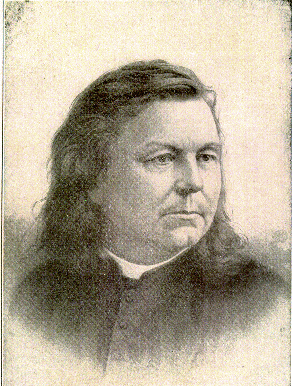
Father Abram Joseph Ryan, Poet-Priest

"Until Scarlett was able to furnish Aunt Pitty’s house as it had been before the war…she had no intention of having guests in her home—especially prominent guests, such as Melly had.

General John B. Gordon, Georgia's great hero, was frequently there with his family. Father Ryan, the poet-priest of the Confederacy, never failed to call when passing through Atlanta. He charmed gatherings there with his wit and seldom needed much urging to recite his 'Sword of Lee' or his deathless 'Conquered Banner,' which never failed to make the ladies cry."
--Gone with the Wind, Chapter XLI 

Father Abram Joseph Ryan
To list the things that make Margaret Mitchell a great writer is a pretty futile endeavor as it's best just to say "Everything" and move on to more mysterious matters... like do Rhett and Scarlett reconcile, what's so special about Marietta anyway, or just how much gaudy jewelry can you fit in one jewelry box?  But as I never let reason get in the way of a chance to talk about GWTW or praise its author, I have an item to add to the "What makes MM so gifted?" list.

And here it is: as we've seen in her references to the Leyden House, the Governor's Mansion, and elsewhere, MM was especially adept at blending historical reality into the fictional narrative of Gone with the Wind, embedding her characters firmly and  convincingly within a very unique moment in American history.  Yet another nice example of this lies in the quote above, where the quite real Father Ryan attends the gatherings of the charming (but of course fictional) Melanie Wilkes.  And thus today we're naturally looking into this Father Ryan character because a) he actually was a rather important figure in the Reconstruction-era South, b) he has a pretty sweet title going on with his Poet-Priest moniker and c) anyone who knowingly sports a hairstyle like this has got to have led an interesting life, right?

Born in 1838 to Irish immigrants, Abram Joseph Ryan spent his early years in Hagerstown, Maryland before moving with his family to Norfolk, Virginia and then St. Louis, Missouri. After completing his religious studies, he was ordained a Roman Catholic priest on September 12, 1860. Yet the decision to dedicate his life to the service of God was not without heartache for young Abram, as he had fallen in love with a devout Catholic girl, mysteriously known  to the history books only as "Ethel." Despite their affection for each other, Abram and Ethel felt called to different paths and went their separate ways--he became a priest, she a nun. Yet Father Ryan would never forget her and references to Ethel, sometimes mournful, sometimes idealistic, appeared regularly in his later poetry.

Father Ryan then began his career in ministry, serving a number of short stints between 1861 and 1863 in Perryville, Missouri, Lewiston, New York and LaSalle, Illinois. Why the short stays? Some scholars believe Ryan, a Southerner by background and personal sympathy, had started to sneak off from his clerical duties to provide chaplain services on the sly to the Confederacy as early as 1862, hence causing the Catholic Church to reassign him multiple times in retribution.

Ryan was reassigned (yet again) to religious service in Tennessee in late 1863 or early 1864--an arrangement that at last seemed to suit him just fine, as he continued to provide chaplain services to the Confederate army at battles nearby, including at the Battle of Franklin (oh yes- Father Ryan could have met Rhett Butler too!). 

Yet Father Ryan's fame and literary significance would only came after the war. Following the surrender of General Lee at Appomattox, he wrote what would become his most famous poem, "The Conquered Banner": 
“I wrote 'The Conquered Banner' at Nashville, Tennessee one evening soon after Lee’s surrender, when my mind was engrossed with the thought of our dead soldiers and our dead Cause. It was first published in the New York Freeman’s Journal. I never had any idea that the poem, written in less than an hour, would attain celebrity status. No doubt the circumstances of its appearance lent it much of its fame. In expressing my own emotions at the time, I echoed the unuttered feelings of the Southern people; and so 'The Conquered Banner' became the requiem of the Lost Cause."
--Father Ryan's recollections, excerpted from  Furl That Banner: The life of Abram J. Ryan, Poet-Priest of the South
"The Conquered Banner" was published on June 24th 1865 and Father Ryan does not exaggerate when he speaks of its (and his, it should be added) instantaneous popularity. The poem was immediately embraced as, well, the banner of the fallen Southern war effort and catapulted him into prominence in the Southern post-war society.

In fact, Father Ryan is often credited with a significant role in establishing the cult of the Lost Cause, through his prolific outpouring of poetry filled with passionate and elegiac descriptions of the Confederacy and the South.  He was one of the earliest adopters of the "Lost Cause" phrase, first using it in an address (ironically and probably intentionally) on July 4 in Nashville, Tennessee. Known for his charisma, his deep mysticism, and his white-hot fervor for all things Southern, he was (no surprise) a passionate opponent of Reconstruction--a theme he explored in depth through his journal The Banner of the South, first published in 1868 from his new home in Augusta, Georgia, where he had relocated after a relatively long stay (for him, anyway) in Tennessee between 1864-1867. 

The journal was ostensibly a Church periodical, but it operated with a strong pro-Southern, anti-Reconstruction stance, typical of Father Ryan's sensibilities. Yet it never pays to pigeonhole someone. For although Father Ryan was one of the fiercest critics of Reconstruction and the North, he eventually put aside his sectional bias (long before, it should be added, many of his equally fervent Southerner compatriots did) and welcomed reconciliation with the North. The turning point for Father Ryan was the epidemic of yellow fever in 1878, when he was moved by the North's spirit of generosity in assisting the South with the sick. His changed opinions are on display in his poem "Reunited":  
Purer than thy own white snow,
   Nobler than thy mountains' height;
Deeper than the ocean's flow,
   Stronger than thy own proud might;
O Northland! to thy sister's land
Was late thy mercy's generous deed and grand.
We close our discussion of Father Ryan where we began it--in the context of MM's reference to him in GWTW. Following the jump, you'll find complete lyrics for his two poems mentioned in the book, "The Conquered Banner" and "The Sword of Robert Lee."  Of course, it must be noted that MM's allusion to Father Ryan attending Melanie Wilkes' gatherings does more than just offer a hint of historical accuracy--it works as yet another way to tie Melanie Wilkes to the values of the Old South. For if "The Conquered Banner" was the South's emblem of its lost way of life, Melanie herself is that very emblem within Gone with the Wind. Perhaps it's no surprise, then, that Mitchell, in her final reference to Melanie and all she stood for employs a mournful nostalgic tone that would be right at home in the writings of Father Ryan:
"She could not wholly understand or analyze what he was feeling, but it seemed almost as if she too had been brushed by whispering skirts, touching her softly in a last caress.  She was seeing through Rhett's eyes the passing, not of a woman but of a legend—the gentle, self-effacing but steel-spined women on whom the South had builded its house in war and to whose proud and loving arms it had returned in defeat."
--Gone with the Wind, Chapter LXII
Late Update: Be sure to check out the comments to find some additional insights on Father Ryan from Donald Beagle, author of Poet of the Lost Cause: A Life of Father Ryan. 
Related Posts Plugin for WordPress, Blogger...